Limited Liability Companies (LLCs) owned by a 401(k) or other qualified retirement plans (e.g. profit sharing plans, defined benefit plans) can be exempt from the California Franchise Tax, when the LLC is used exclusively for the purpose of acquiring and holding real estate. In other words, if you have a 401(k) owned LLC that is used to buy and hold real estate investments then that LLC is likely exempt from the California Franchise Tax.
Requirements for the Exemption
The exemption from the California Franchise Tax is found in R&TC Section 23701x, and requires, among other things that the LLC:
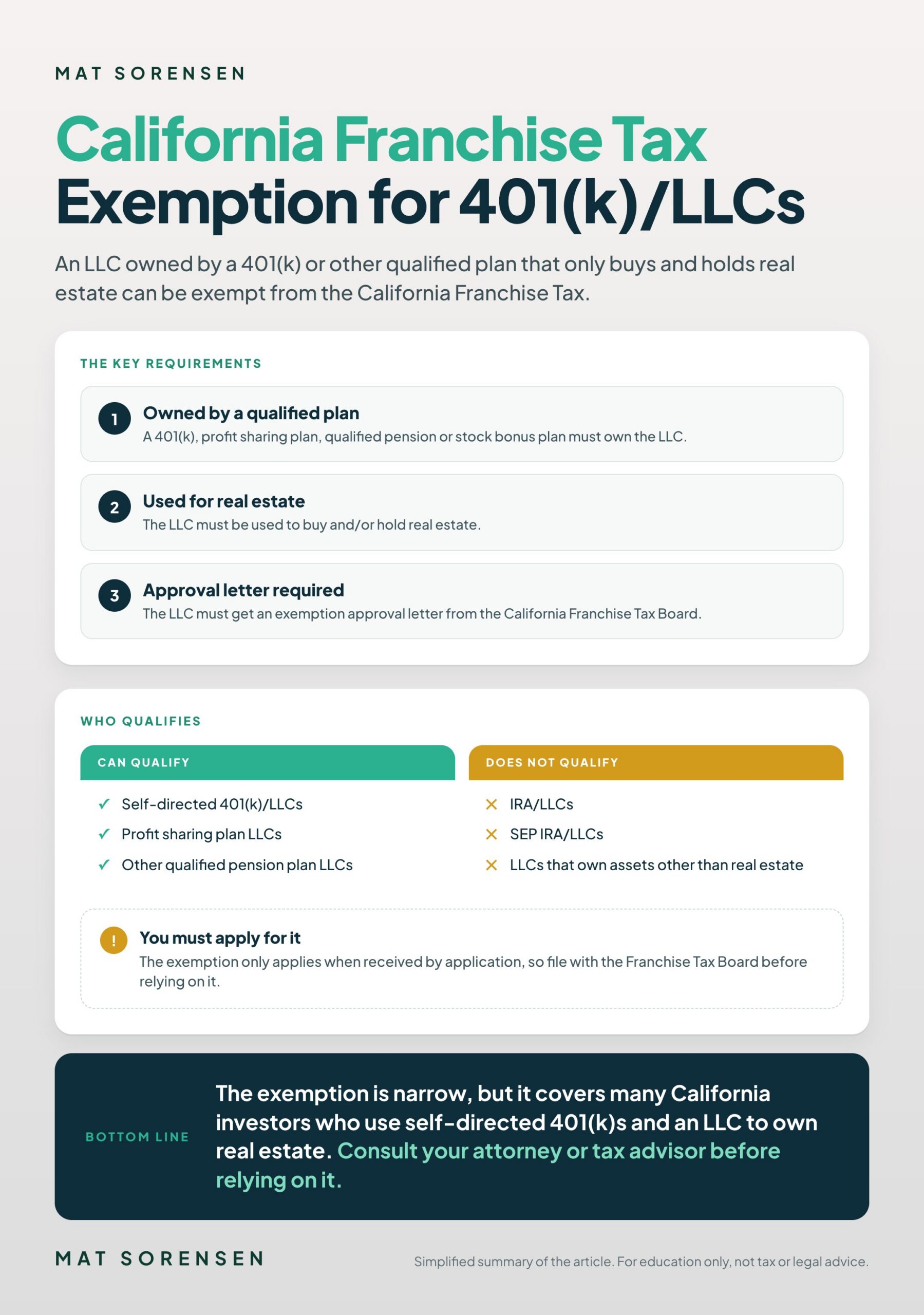
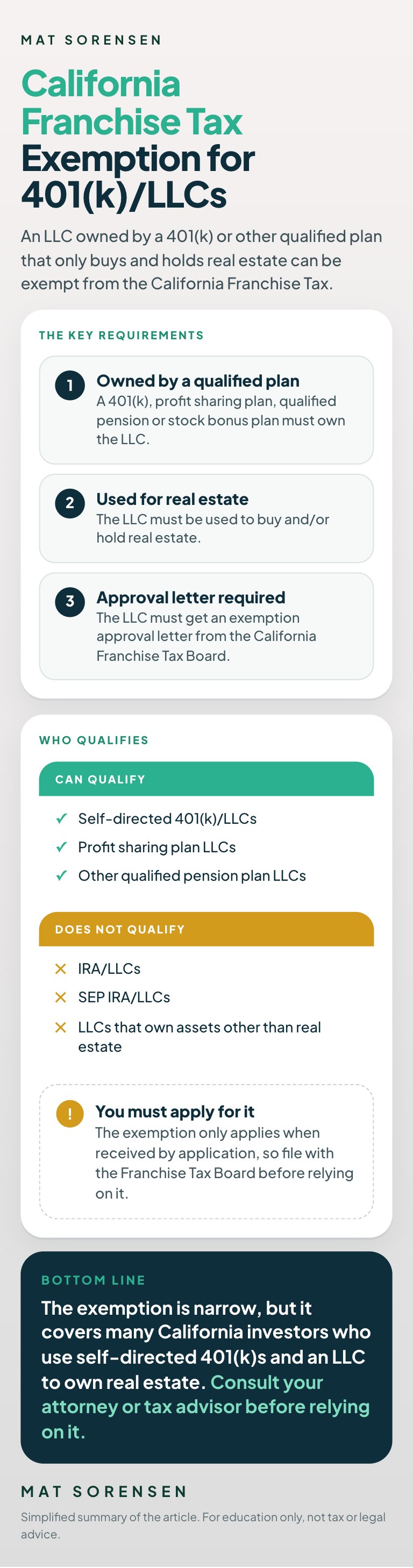
1. Be Owned by a Qualified Pension Plan. This exemption only applies to qualified pensions, profit sharing plans, and stock bonus plans. This would include self-directed 401(k) and profit sharing plans, which are commonly used by many self directed retirement plan investors. It is important to note, however, that a self directed IRA (even if a SEP IRA) would not qualify as a qualified pension plan under the exemption.
2. The LLC Must Be Used to Buy and/or Hold Real Estate. The LLC owned by the 401(k) (or other employer based plan) must be used to buy and/or hold real estate.
3. Requires CAFTB Determination Approval. In order to rely on the exemption, the LLC must file receive an exemption approval letter from the California Franchise Tax Board (CAFTB). This is obtained by filing CAFTB Form 3500.
IRA/LLCs Do Not Qualify
It is important to note that the exemption will not apply to IRA/LLCs, as IRAs do not specifically meet the exemption’s definition of a qualified retirement plan. I have had clients seek the exemption from the tax with SEP IRAs, arguing that these retirement accounts were similar to a 401(k) or profit sharing plan, but their exemption request was denied.
Additionally, if the 401(k)/LLC is used to own assets other than real estate then the LLC will not meet the exemption requirements. Despite the narrow application of the exemption, it does cover many investors in California who use self directed 401(k)s and Profit Sharing Plans to invest and own real estate, and who do so using an LLC. Because the CAFTB tax rules can be tricky, please consult with your attorney or tax advisor prior to relying on the exemption. Also, please note that you must actively file for the exemption with the CAFTB as the exemption is only applicable when received by application.
FREE SOLO 401(K) GUIDE
Self-employed? Learn how a self-directed Solo 401(k) works and how much you can contribute.
Get the Free Solo 401(k) Guide
Prefer to talk it through? Book a call with a Directed IRA specialist
By: Mat Sorensen, Attorney and Author of The Self Directed IRA Handbook
By: Kevin Kennedy, Attorney, KKOS Lawyers